Companies House forms
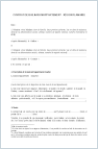
Companies must keep the records at Companies House up to date with certain changes. Use our handy table to make sure you know what to file and when.
What needs filing?
Broadly speaking, if there is a significant change in a company’s make-up, Companies House will need to be notified. Companies House produces forms to use to make sure that all of the relevant information is included. Filing requirements are imposed by the Companies Act 2006, and failure to file some documents can even result in criminal prosecution.
Our table sets out the forms needed for the common events in a company’s life, along with their deadlines and any enclosures and fee required. There are also forms for less common events, such as dissolving a company.
Get it right
There are deadlines for many of the forms, and in some cases the change in question is ineffective until the paperwork has been registered at Companies House. The forms relating to mortgages and charges are particularly strict on the deadline and content (you need a court order to file out of time, for example). This is one of the reasons it will usually be your professional advisor who files these forms.
For all forms it is important to fill them out correctly and enclose any required documents. Each form is annotated with explanations where necessary and a checklist at the bottom to help make sure you have remembered everything.
There is a filing fee for some forms, as noted in the table. They differ depending on the method of filing and can change.
Next steps
The forms (online and paper versions) can be found at: https://tinyurl.com/yce2ulue and the applicable fee here: https://tinyurl.com/ycck9shp
Related Topics
-
HMRC takes aim at side hustles
People with side hustles are the target of a HMRC press release reminding them of their potential tax obligations. Why has this been published now, and what are the key points to remember?
-
Can sale with no goodwill charge still qualify as TOGC?
You are selling an unprofitable part of your business but the sale does not include any charge for goodwill due to trading losses. Can the sale still qualify as the transfer of a going concern and what conditions must you meet?
-
VAT on electricity to be cut
The new Prime Minister has announced a cut to the rate of VAT on electricity from 1 October. What's the full story?